
1. WS-15 Emei Turbofan (Independently Developed)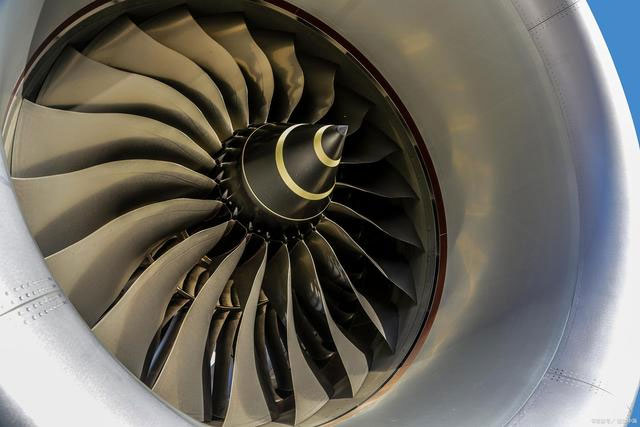
Key use: For the J-20 fifth-generation fighter. High thrust-to-weight-ratio large-thrust turbofan, afterburning thrust 18 tf, design verification and finalization in 2015.
Assessment: The WS-15 fifth-generation aero-engine, fully named the "Emei" turbofan (WS-15), is a small-bypass-ratio thrust-vectoring turbofan developed for China's fifth-generation heavy/medium fighters. The WS-15 is mainly used on the twin-engine heavy stealth fighter, the J-20. The WS-15 is the development code for the CJ-2000 model. This engine's inlet adopts an all-titanium annular inlet casing with 18 variable-incidence inlet guide vanes, its front section being radial struts and the rear section being the adjustable part, with the leading edge anti-iced by air from the high-pressure compressor.
2. WS-10B Taihang Engine
Key use: The WS-10 series engine has spawned at least 7 variants, widely used on multiple fighter types—quite successful! The latest improved J-10C has been installed with small-batch WS-10B engines since leaving the factory. Another WS-10B engine seems stronger than the WS-10B in stability, because all 100-plus J-16 fighters produced since finalization use the WS-10B2 engine.
Assessment: The "Taihang" WS-10B improved engine, with thrust reaching the 14-ton class, was design-finalized in 2015. China's first large-thrust turbofan engine was named Taihang, the significance of which is self-evident. The Taihang engine began pre-research in 1978, was approved in 1987, and completed design finalization review and assessment on December 28, 2005, taking 27 years. The Taihang engine is China's first high-performance, large-thrust, afterburning turbofan engine with independent intellectual property rights, ending the blank in domestic advanced turbofan engines. The WS-10 engine's R&D referenced some technologies of the Russian AL-31 engine; the initial WS-10/10A (max thrust 12.5t) was finalized in 2005 and installed on the J-11 fighter for flight-test verification. The "Taihang" WS-10 series has spawned at least seven variants—WS-10, WS-10A, WS-10B, WS-10B2, WS-10H, WS-10 TVC, and WS-10C (if counting WS-20, that's eight)—and is widely equipped on multiple domestic fighters; it can be said to be currently the most successful domestically produced engine.
3. WS-13 Taishan Turbofan (modified copy of Russian RD93)
Key use: For the FC-1 (JF-17/Xiaolong). Medium-thrust turbofan, afterburning thrust 8.5tf, mass production in 2011.
Assessment: The WS-13, abbreviated WS-13, is a medium-thrust military turbofan engine designed and produced by China's Guizhou Aviation Group. This engine is a low-bypass-ratio engine improved on the basis of the Russian RD-33 engine. The Russian side was responsible for training technical personnel and some workers; after training a batch of workers, the equipment was shipped back together, installed, debugged, and put into production, with reasonable arrangement of the production progress of each component, carried out in parallel. Based on the RD-33 design, China and Russia improved the local structure design, named it Tianshan-21, later named "Taishan."
4. WS-11 Turbofan
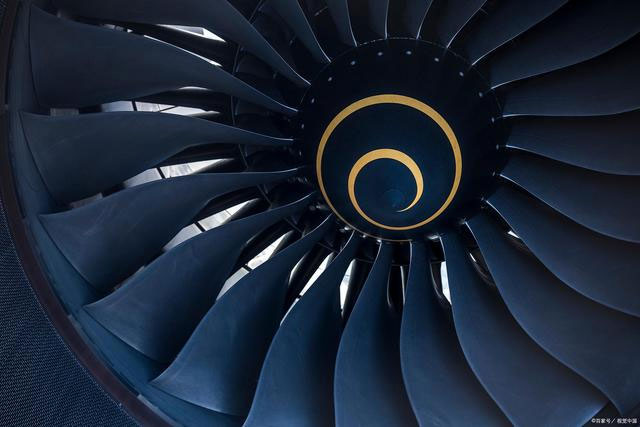
Key use: For the K-8/JL-8 trainer and UAVs. Small-thrust non-afterburning turbofan, thrust 1.6tf, mass production in 2002.
Assessment: The Southern Aviation Power Company began reverse-engineering in 1986 based on the Ukrainian AI-222-25 turbofan engine; the new engine was named WS-11 (WS-11). WS-11 development began in August 1992, was ignited in 1995, first flew on the K-8 aircraft on October 26, 1998, and WS-11 finalization flight testing ended in October 2001 with small-batch delivery. After a tortuous period of use and testing, the WS-11 was officially finalized in March 2002. China's domestically used K-8 was early called the JL-8 (Trainer-8, not called Jiao-8); later, because the WS-11 engine was successfully developed and equipped on the aircraft.
5. WS-16 Turbofan
Key use: For the L-15 (JL-15 Falcon) trainer series. Small-thrust afterburning turbofan, afterburning thrust 4.2tf, mass production in 2012.
Assessment: Introduced Ukraine's AI-222-25F technology. It was the only powerplant that could be used on the L-15 jet trainer of AVIC Hongdu Aviation Industry Group. The L-15B plan is powered by a new version of a basic engine, named the AI-222-25F.
6. WZ-8G Turboshaft (from French Arriel–WZ8A modified)
Key use: For the Z-9 (AC312), WZ-19, and Z-11 (AC311) series helicopters. Small-power turboshaft, power 600kW, mass production since 2005.
Assessment: The WZ-8 (WZ8) engine is a helicopter turboshaft engine developed by China on the basis of the French Arriel turboshaft engine, a military-civil dual-use engine produced by China's Southern Aviation Power Machinery Company, mainly used on the Z-9 series helicopters. To produce a powerplant for 2–4 t-class helicopters, China purchased the production license for the Arriel 1C, 1C1 turboshaft engines from France's 711 Company in 1980, introducing the engine's complete design drawings, process, metallurgy, inspection, and assembly, test-run, and other technical documentation. In 1981, China National Aero-Technology Import & Export Corporation (CATIC) signed an Arriel-series engine production patent transfer contract with France's Turbomeca (TM); the Southern Aviation Power Machinery Company produced the WZ-8 series turboshaft engines according to the Arriel-series engine's complete design, process, metallurgy, and inspection documentation. Thereafter, it successively introduced the Arriel 1D, 1D1, 1M, 1M(1) engine technology patents, successfully developing the WZ-8A, WZ-8D, WZ-8E, and WZ-8F series engines.
7. WZ-9 Turboshaft (Indigenously Developed)
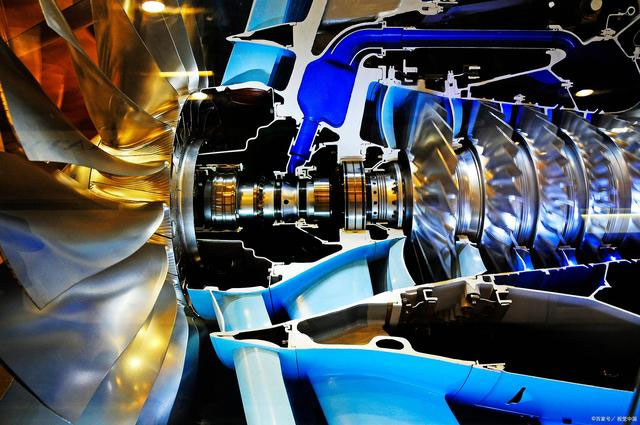
Key use: For the WZ-10 series helicopters. Medium-power turboshaft, power 1,000kW, mass production since 2009.
Assessment: According to Jane's Defence, the WZ-10's WZ-9 turboshaft engine has a single-unit power exceeding 1,100 kW, surpassing the Eurocopter Tiger's single-unit 958kW, and although this engine is a copy of the PT6C, it is purely domestically manufactured. This fully demonstrates that China's helicopter industry has made major progress, solving the key "heart" problem. The aero turboshaft engine, abbreviated as turboshaft engine, is a turbojet engine that outputs shaft power. France was the first country to develop turboshaft engines. In the early 1950s, Turbomeca developed a helicopter engine with only one-stage centrifugal compressor and two-stage turbine single-rotor output shaft power, with power reaching 206kW (280hp), becoming the world's first helicopter aero turboshaft engine.
8. WZ-10 Turboshaft (Indigenously Developed)
Key use: For a new-type helicopter (3-engine, 20 t class). Large-power turboshaft, power 1,800 kW, mass production in 2015.
Assessment: The Z-20 uses two WZ-10 turboshaft engines with considerable power, the engine's maximum output power being 1,600 kW. This is basically comparable in performance to the two General Electric T700-GE-700/-701C turboshaft engines used on the MH-60G/HH-60G Pave Hawk. As more and more high-resolution images of various Z-20 models are released, it is clear that the Z-20 has become quite mature, with excellent craftsmanship details.
9. WZ-11 Turboshaft
Key use: For the Z-8F (AC313) and Z-20 (9-ton aircraft) series helicopters. Medium-power turboshaft, power 1,500 kW, mass production in 2012.
Assessment: The production-model Z-20 helicopter planned to use the then-under-development WZ-11 Qianjing turboshaft engine, or the WZ-16 turboshaft engine. One view holds that the WZ-11 engine is a copy of Canada's Pratt & Whitney PT6B-67 engine, while the WZ-16 is an upgraded version of the licensed Chinese product of the "Ardiden" engine developed for the China-Europe Z-15 helicopter.
10. WZ-16 Turboshaft (co-developed with France, Ardiden 3)
Key use: For the WZ-10 and Z-15 (6-ton aircraft AC352) series helicopters. Medium-power turboshaft, power 1,200kW, mass production in 2014.
Assessment: The WZ-16/Ardiden 3C engine is a new turboshaft engine jointly developed by AVIC Engine Corporation and France's Safran-owned Turbomeca on the basis of equal cooperation; the Chinese side named it WZ-16 and the French side named it Ardiden 3C. The engine features cutting-edge technology and meets the growing market demand for 6–8 t-class helicopters. Modular design and dual-channel FADEC give this engine high reliability, ease of use, and low fuel consumption. The WZ-16 engine, fitted to AVIC Helicopter's AC352 helicopter, will provide operators with unparalleled high performance, simple maintenance, and low operating costs, enabling the helicopter to successfully perform demanding flight missions in a fiercely competitive environment.