
The world's five major aero-engine manufacturers are the United States' General Electric, the United Kingdom's Rolls-Royce, the United States' Pratt & Whitney, France's Safran, and Germany's MTU.
1. General Electric(GE)
Abbreviated GE, it is the world's largest comprehensive power and equipment manufacturer. Its engines are known for strong reliability and high cost-performance, and have long been regarded in the industry as the "best" engines. For example, the GE90—the civil engine with the highest single-engine thrust in the world—the excellent CF6-80C/E civil engine, and the most powerful turboshaft engine family, the CT7-8 series, are all GE masterpieces. Notably, the widely used Boeing 737's CFM56 engine was also led and developed by GE.
2. Rolls-Royce(RR)
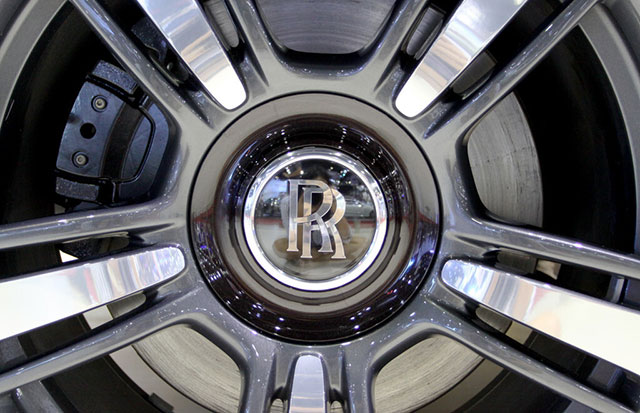
Also written Rolls-Royce, abbreviated RR, it is a brand second only to GE in the global turbofan engine field and is a U.K.-led international enterprise. Its engine market share is also considerable: the "Trent" 1000 series low-noise engine used on the Boeing 787, and the "Trent" 500/700 series used on the world's quietest airliner products, the A330/340 series, are all RR masterpieces; the RTM332 used on the AW101—hailed as the world's most advanced medium helicopter—is also an RR product.
3. Pratt & Whitney(PW)
Abbreviated P&W, it is a world-renowned manufacturer of helicopter turboshaft engines and civil and military turboprop/turbofan engines. For instance, one of the standard powerplants of the F-16 comes from PW; the engine used on the world's most advanced 6-ton-class medium helicopter, the AW139, and the PT6C-67C currently used on China's WZ-10 (armed helicopter) are both PW products; the engine of our most advanced regional airliner, the MA600 (Xinzhou 600), also uses Pratt & Whitney technology.
4. France's Safran
The Safran Group of France is a world-class aero-engine and equipment manufacturer with four core specialties: aerospace propulsion, aerospace equipment, defense-security and communications, and propulsion systems and equipment for aircraft, helicopters, missiles, and space launchers for civil and military markets. The Safran Group has participated in many of the world's large aerospace projects and, through independent development or cooperation, holds a leading position globally or in Europe. Its subsidiary SNECMA undertook the design and development of the propulsion systems for Europe's Ariane 1–5 rockets and liquid boosters.
The Safran Group has long remained within the top 15 of the "Global Aerospace 100" ranking, and is now the world's third-largest aerospace equipment supplier, second only to the U.S.'s United Technologies (UTC) and GE Aviation. Moreover, from its development over the past decade or more, it has been like France's "United Technologies (UTC)." The Safran Group currently has six main business segments, the most important being aircraft engine manufacturing, its mainstay being the CFMI joint venture with GE. CFMI has grown into a world-class turbofan engine manufacturer. In fact, SNECMA's strength in aero-engines is very strong—especially the world-class Olympus 593 engine launched in 1966. The Safran Group masters cutting-edge technologies in optoelectronics, avionics, navigation, electronics, and key software. The Safran Group develops and sells gyro-stabilized devices for sights, periscopes, infrared cameras, and multi-function telescopes, and provides world-leading inertial navigation systems. Safran possesses world-leading technologies including biometric technologies such as fingerprint, iris, and facial recognition.
5. Germany's MTU
MTU is a subsidiary of Germany's Daimler-Benz Group and a global leading diesel engine manufacturer, with diesel engines ranging from 35 kW to 9,000 kW, widely used in warships, heavy trucks, construction machinery, and railway locomotives. As a supplier of land, marine, and railway propulsion systems as well as power-generation equipment engines, MTU enjoys a worldwide reputation for its leading technology, highly reliable products, and first-class after-sales service.
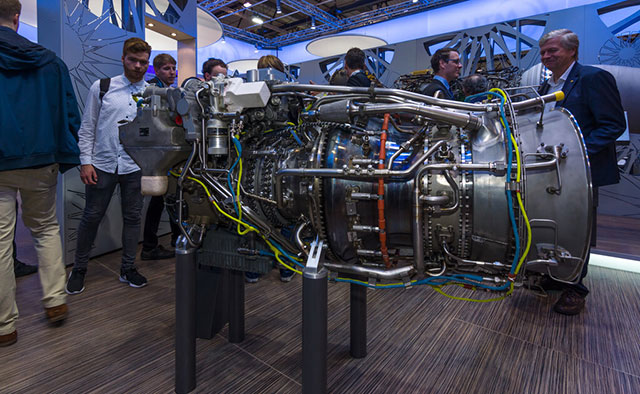
MTU has always been known worldwide for its high output power, high efficiency, small size, and durability, but its relatively high price also limits MTU products to mostly critical fields such as warships, tanks, nuclear power, transport ships, and railway locomotives. At present, most of the world's main battle tanks use MTU-series diesel engines, such as the "Challenger" 2E and the Leopard 2 series.
General Electric's biggest characteristic is its simultaneous military and civilian focus.
GE's aero-engine manufacturing business has the largest scale and highest profit. Especially in revenue scale it holds an absolute advantage; GE is currently the world's largest aero-engine manufacturer. GE's main flagship products are various engines. GE holds an irreplaceable position in military engines; in the civil engine field GE is far ahead, monopolizing 55% of the global market share, and is very strong in gas turbines. Notably, the LM2500 is another ace of GE and has become the most successful marine engine in Western countries and even globally, equipped on the warships of at least 29 countries.
Because its aero-engine business and pedigree are the most extensive, it covers most of the U.S.'s military and civil aircraft. It almost entirely covers all of the U.S. Air Force's third-generation fighters, bombers, attack aircraft, and armed helicopters, while also covering most of the Navy's non-nuclear-powered main warships. The F404 is installed on the U.S. Navy's main carrier-based aircraft, the F/A-18 series, as well as on the renowned B-2 stealth bomber's engines. Its only gap is in the U.S. military's fourth-generation fighters.
More than half of the world's civil airliners are heavily dependent on GE engines, whether in commercial aviation or general aviation. GE's single-engine highest-thrust GE90 is the powerplant of Boeing's mainstay 777; among them, the CF34 is widely used in various regional aircraft and business jets, while the CF6-80C/E is the most superior civil engine, and the CT7-8 series is the most powerful turboshaft engine.
The U.K.'s Rolls-Royce's biggest characteristic is its civil-focus orientation.
The U.K.'s Rolls-Royce's aero-engine manufacturing accounts for 70% of its business. In the world aero-engine market, its market share is second only to the U.S.'s GE.
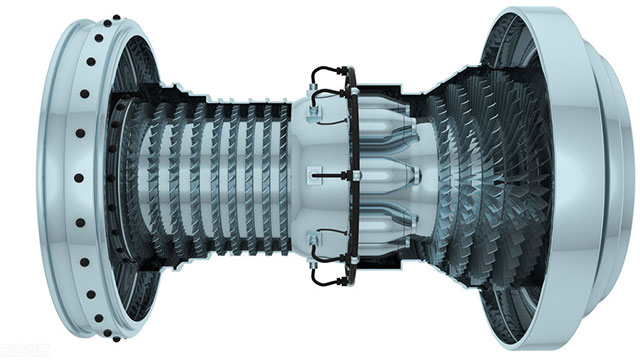
Rolls-Royce's flagship product is providing power for wide-body airliners. It is the company's main flagship product. In Rolls-Royce's aero-engine manufacturing, the civil business share once reached 75%, and revenue share long remained at around 50%; 80% of its orders are for the Trent series, while defense revenue is only between 15%–20%.
Rolls-Royce is one of the big players in the global trunk-airliner engine market. The RB211 series three-spool engine it independently developed is one of the most successful large civil aero-engine series today, and in particular the V2500 engine jointly developed with Pratt & Whitney and others is a strong competitor in the Airbus A320-series engine market.
In fact, Rolls-Royce also has many weaknesses; for example, on the Boeing 787, among orders from January 2019 to January 2020, only 22 aircraft used Rolls-Royce engines, while GE had as many as 46. Rolls-Royce has withdrawn from the single-aisle aircraft competition, focusing mainly on the twin-aisle aircraft market. It is worth looking forward to that Rolls-Royce is now heavily investing in new geared-turbofan wide-body airliner engines.
The U.S.'s Pratt & Whitney's biggest characteristic is its military-focus orientation.
Pratt & Whitney started with piston aero-engines and grew up together with the U.S. aviation industry, and is one of the world's most important military and civil aero-engine design, manufacturing, and maintenance providers.
Pratt & Whitney's aero-engines are mainly military-oriented. To this day it remains one of the main U.S. defense contractors, almost "monopolizing" the U.S. military aero-engine market. Pratt & Whitney has nearly 22,000 military engines in service in 22 countries, called the strongest military aero-engine. In the military small-bypass-ratio turbofan market, GE has always been suppressed by Pratt & Whitney. Its military power products are especially represented by the F100 and F119 engines, and it is the sole power supplier for the F-22 and F-35 fighters.
Pratt & Whitney is highly active in the commercial aero-engine market, an important sign being the PW4000, used on aircraft including the Airbus A300, A310, A330, and Boeing's 747, 767, and 777. Notably, it is pressed by GE and CFM International in the high-bypass-ratio civil market.
France's Safran's biggest characteristic is balance.
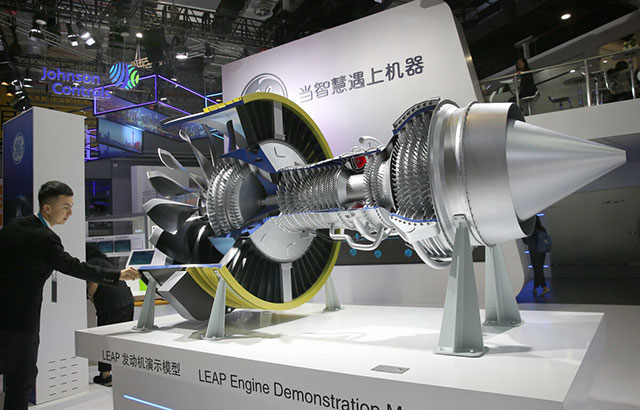
Safran's most important business is also aircraft engine manufacturing, accounting for about 60% of the group's revenue. It mainly relies on the joint venture established with GE in the 1970s. The joint venture's CFM56 and the new-generation LEAP-series engines have very good order momentum and shine in the single-aisle commercial engine field.
Safran's subsidiary SNECMA's main product, the M88 engine, is independently developed and used on the Rafale fighter; another representative is the M53 engine equipped on the Mirage 2000. It is reported that Safran cooperated with Rolls-Royce on the Jaguar attack aircraft and obtained single-crystal turbine blade technology; it also cooperated with GE and obtained the F101 engine core technology.
Safran is the world's fourth-largest aero-engine manufacturer. Undoubtedly, its difference and distance from the three giants are clear; Safran is more like an aero-engine subsystem provider. Safran's business scope is even broader than GE's. Because France's Safran has both civil and military engines, and includes turbofans, turboshafts, aircraft components, and even rocket engine business, each independent and balanced with each other. Its engine products basically cover every market segment, especially involving the powerplants of military transport aircraft, fighters, helicopters, and trainers. France's Safran, precisely because of its broad and balanced distinctive characteristics, makes its overall business less prominent, especially lacking a mainstay flagship product such as an independently developed large-thrust turbofan engine, and having very few independently developed complete-engine products. Undoubtedly, against the backdrop of Rolls-Royce in Europe and GE and Pratt & Whitney in the U.S., France still maintains its own national military industry, using engines to sustain the Rafale fourth-generation fighter, with a very clear strategic positioning.
Germany's MTU's biggest characteristic is its focus on subsystems.
Germany's MTU is an aero-engine company rather than a complete-engine manufacturer. Therefore, it is a genuine aero-engine subsystem supplier. MTU is often called the world's fifth-largest aero-engine company, but its business mainly chooses to cooperate with the three giants, participating in various global projects by providing solutions or taking equity stakes—for example, 30% of the world's aero-engines contain components produced by MTU.
Whether in key components such as low-pressure turbines, high-pressure compressors, and turbine casings, or in manufacturing processes and repair technologies, MTU is a leader in the industry. Germany's MTU provides indispensable services for a large number of commercial and military aero-engines. Even when the U.S. engine giant Pratt & Whitney encounters compressor difficulties, it usually turns to MTU for resolution.
In the commercial engine maintenance industry, Germany's MTU is the world's largest independent supplier of MRO (Maintenance, Repair, and Overhaul) services, providing repair solutions for many different engines. The most typical example is that, because it provides maintenance and repair services for the V2500 engine launched by International Aero Engines (IAE), it has become the world's largest supplier of engines for the Airbus A320 family.
By 2019, more than 7,000 V2500 engines had been delivered to Airbus Europe, and with this order alone, MTU can easily sustain itself for two or three decades. Germany's MTU set new revenue and profit records in 2019, with revenue reaching €4.6 billion and MRO revenue reaching €2.7 billion, mainly from the V2500 engine and GE Aviation's CF34 engine.
In summary, the world's three aero-engine giants—GE, Rolls-Royce, and Pratt & Whitney—are in the first echelon of global aero-engine manufacturing. The three giants almost control the entire industry chain of core technology R&D, final assembly integration, sales, and customer service for large civil aero-engines. And they each have their own advantages in civil engines. Although the U.K.'s