
21. WS-12 Tanggula Turbofan Engine (indigenously developed)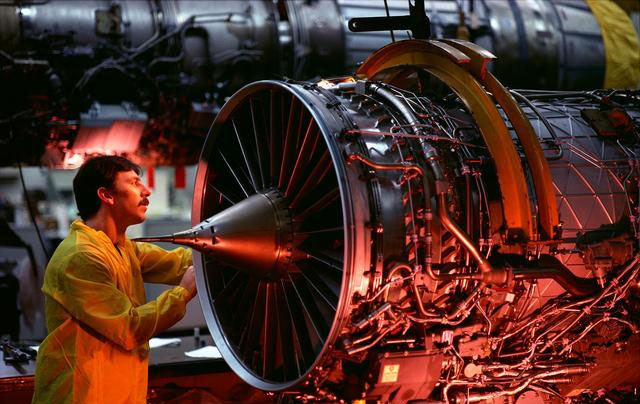
Key use: For the FC-1 (JF-17/Xiaolong) upgrade and the future medium-fourth-generation J-21 fighter. Medium-thrust turbofan, afterburning thrust 9.5tf, expected in mass production in 2014.
Assessment: A turbofan engine (Turbofan) is a type of aircraft engine developed from the turbojet engine (Turbojet).
22. WS-12C Turbofan Engine (WS-12 high-bypass-ratio core)
Assessment: The WS-12 engine of the Liyang Engine Factory. The WS-12 is of great significance, being a mainstay equipment of its time and irreplaceable. Speaking of the WS-12, one must mention China's JF-17 (Xiaolong) fighter. The first batch of engines fitted to the JF-17 were RD-33 engines imported from Russia—the RD-33 being the original engine of the MiG-29. Later we localized it; the localized model is the WS-13 engine. Removing the afterburner from the WS-13 to cancel the afterburning function yields the WS-12 engine. Hence the WS-12 is also shorter than the WS-13.
23. WP-13F Turbojet Engine
Key use: For the J-7, J-8 series, and the J-9 trainer. Medium-thrust turbojet, afterburning thrust 8.2tf, in mass production since 1995.
Assessment: Turbofan models include the WS-12, WS-13, WS-14, WS-15, WS-17, WS-18, and WS-20, plus the WS-19 disclosed earlier by the Chengdu Engine Company and the secretly developed WS-10C and WS-30. There are at least 10 small-bypass-ratio turbofan models. The WP-13 series focused on improving the compressor, increasing airflow, using titanium-alloy materials for compressor components, and successfully applying China's research results to the development of the "WP-13." The success of the "WP-13" propelled aircraft projects forward by leaps and bounds; the "J-7E," "J-8G," and "Shanying ETC2000G" became the terminators of the "MiG-21" series.
24. WS-10A Taihang Turbofan Engine
Key use: For the J-11 series. Large-thrust turbofan, afterburning thrust 12.5tf, in mass production since 2006.
Assessment: The WS-10A turbofan is a development of the WS-10, mainly equipped on the J-11B fighter. The biggest difference between the WS-10A and the WS-10 "Taihang" is the core engine technology: the WS-10A core is a product combining CFM56 core technology with AL-31F core technology. The WS-10A's overall performance approaches that of the F110-GE-129 IPE (an improved performance version of the F110).
25. WS-10G Taihang Turbofan Engine
Key use: For the J-10 and J-11 series. Large-thrust turbofan, afterburning thrust 13.8tf, full-authority digital control, in mass production since 2011.
Assessment: The WS-10G, as a traditional military large-thrust engine with a relatively large bypass ratio, also has the advantage of greater air intake than pure fourth-generation aero-engines—that is, with equal flight distance, it is markedly more fuel-efficient; or, with the same internal fuel, a stealth heavy fighter using the WS-10G will have a larger combat radius, directly able to take on the famously "short-legged" F-22A fleet. Beyond being able to use the upgraded third-generation large-thrust engine directly as a fourth-generation large-thrust engine without disadvantage in thrust metrics, the WS-10G's greater strength lies in its excellent stability; its reliable service life also reaches the standard of long-life military large-thrust engines such as the F119, exceeding 4,000 hours. A fighter's engine life approaching 4,000–5,000 hours will, for the first time, achieve a full life essentially equal to that of the airframe. Thus, two engines can last the aircraft's lifetime, requiring at most one intermediate overhaul.
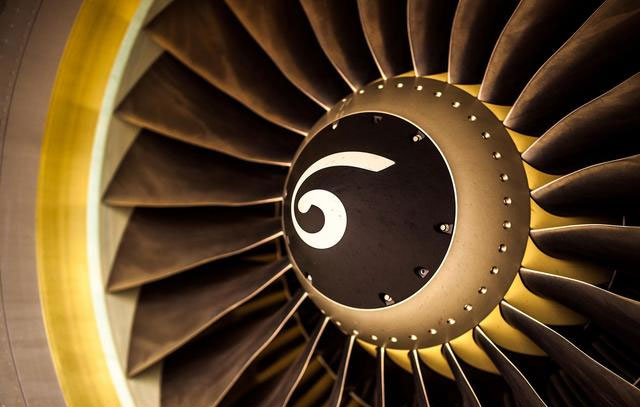
Key use: For the heavy transport Y-20 and the large airliner C-919. Large-thrust turbofan, thrust 12.0tf, expected in mass production in 2011.
Assessment: The WS-118 is a domestic heavy-transport turbofan based on the WS-10. According to foreign media, the WS-118 is applied to large aircraft with a takeoff weight exceeding 100t, and will be used on a new-generation heavy transport, including the C-919 airliner.
27. QC-185 Aero-Derivative Gas Turbine (WS-10A core, LM25000-class, produced by Liming)
Key use: For the Type 055 (four engines, 9,000t) large destroyer series, the Type 054B (two engines, 4,500 t) frigate-destroyer series, etc. Medium-power gas turbine, power 18,500kW, in mass production since 2012.
Assessment: Destroyers are main combat warships that must keep up with carrier battle groups, with a design speed target of 30knots; frigates are secondary warships performing medium-to-low-intensity tasks, emphasizing cost-performance presence, with a design speed of around 27knots. Destroyer main power is the QC-280 gas turbine, while frigate main power is the 16PA6V280 diesel engine. The main powerplants of large destroyers and frigates of the world's major navies are basically gas turbines, and the QC-185, as China's first aero-derivative gas turbine with complete independent intellectual property rights, is a double insurance for the main power of China's large destroyers and frigates.
28. WP-14C Kunlun III Turbojet Engine
Key use: For the J-7, J-8 series, and the J-9 (Shanying) trainer upgrade. Medium-thrust turbojet, afterburning thrust 8.2tf, in mass production since 2005.
Assessment: The WP-14 engine, i.e., the WP-14 ("Kunlun" engine), was designed by the Shenyang Engine Research Institute of the Aviation Industry Corporation of China (AVIC) and jointly developed by the Shenyang Liming Aero-Engine Corporation and 34 other units. The WP-14 was finalized in May 2002 and is the most advanced medium-thrust military turbojet engine in China at the time, mainly used on the J-8H/F/G series fighters. The engine's maximum thrust specific fuel consumption is 0.098 kg/(N·h), its repair time reaches 850 hours, and its total life reaches 1,500 hours, overall reaching the world's mid-1980s technical level.
29. QC-280 Aero-Derivative Gas Turbine
Key use: For the Type 052B/C/D (twin-engine, 6,000t) large destroyers. High-power gas turbine, power 28,000 kW, in mass production since 2009.
Assessment: Russia had earlier taken a liking to China's domestically produced large marine gas turbine model, the QC-280. According to reports, as early as 2008, the destroyer 169, on its first escort mission to the Gulf of Aden, was installed with the QC-280 gas turbine for sea trials; its maintainability and tropical-service reliability were greatly improved over older gas turbines. Media reported that China's 10,000-ton destroyer, the Type 055, uses four QC-280 gas turbines, with a total power exceeding 90MW.
30. WS-18A Turbofan Engine
Key use: For the heavy transport Y-20 and the H-6K bomber. Large-thrust turbofan, thrust 12.0tf, expected in mass production in 2015.
Assessment: The Chinese-produced WS-18 high-bypass turbofan is essentially the Chinese version of the D-30-KP2; however, thanks to China's lead over Russia in materials technology, the Chinese-produced WS-18 engine outperforms the original Russian version by about 6%–9%, can fly at least 200 km farther in maximum range, and has lower fuel consumption. Crucially, the engine is wholly Chinese-produced. China's H-6K bomber also uses this new engine. The WS-18 engine, i.e., the WS-18 aero-engine, is a copy of the Russian D-30KP-2 aero-engine. The model was design-finalized in 2019, with variants FWS-18, FWS-18A, WS-18B, and WS-18C, fitted to the Y-20 and improved H-6 respectively; the WS-18's performance is improved over the D-30KP-2.