
11. WJ-6C Turboprop Engine
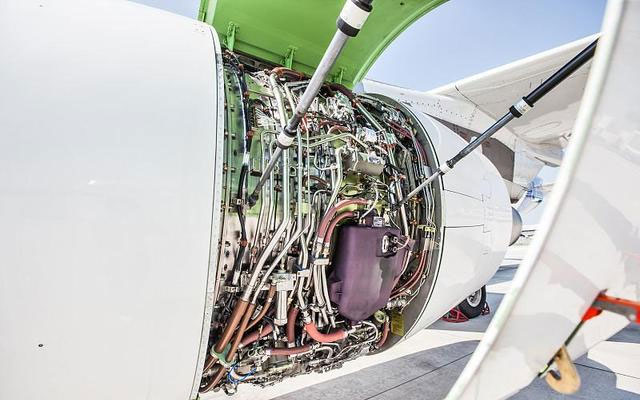
Key use: For the Y-9 transport (domestic six-propeller aircraft, 20t payload) series. Medium-power turboprop, power 3,800kW, in mass production since 2006.
Assessment: The WJ-6 is a single-shaft high-altitude turboprop engine, fitted to the Y-8, Y-8C, Y-8Q and other variants—i.e., the powerplant for all Y-8 derivatives. The WJ-6 was reverse-engineered from the Soviet AI-20M. At the time, understanding of the design philosophy and technical documentation was inadequate, but the Southern Aviation Power Machinery Company began reverse-engineering in August 1969 to meet the military's transport and operational needs. Before drawing, it also referenced drawings of other engine models; the drawing design was later led by the Xi'an Aero-Engine Factory. In September 1970, the WJ-6 first ran on a test bench; in April 1973, it first flew; in 1976, design finalization was completed and it entered service.
12. WJ-9 Turboprop Engine (WZ-8A core derivative)
Key use: For the Y-12 transport series. Small-power turboprop, power 550kW, in mass production since 1995.
Assessment: The WJ-9 is China's first turboprop engine developed in accordance with airworthiness regulations. A turboprop engine (Turboprop Engines, often shortened to turboprop) is a type of gas turbine engine typically used on aircraft, providing thrust (or propulsion) via a propeller.
13. WJ-5E Turboprop Engine (Dongan WJ-5 improved)
Key use: For the Y-7 transport series. Medium-power turboprop, power 2,000kW, in mass production since 1992.
Assessment: The WJ-5E (code WJ5E) was successfully developed by the Harbin Dongan Engine Manufacturing Company. On December 27, 1993, it passed review by the Type Certification Board (TCB); on December 31, the Civil Aviation Administration of China (CAAC) approved and issued the type certificate to Dongan for the WJ5E. This is China's first turboprop engine to obtain a CAAC type certificate. Turboprop engines are more efficient than turbofan and jet engines at low speeds and are widely demanded in low- and medium-speed aircraft, such as for patrol and firefighting. They are highly safe, impose relatively low requirements on airfields, and are low-cost, finding wide use in small airliners, private aircraft, business jets, agricultural aircraft, and multi-purpose aircraft.
14. WJ-10 Turboprop Engine (indigenously developed)
Key use: For the Y-19 transport (30t payload) series. Medium-power turboprop, power 5,000kW, in mass production since 2014.
Assessment: The WJ-10 (turboprop) series is mainly fitted to a new-generation naval early-warning model (or KJ-3000); this model was expected to be finalized around 2020.
15. WZ-6 Turboshaft Engine
Key use: For the Z-8 helicopter series. Medium-power turboshaft, power 1,250kW, in batch production since 2000.
Assessment: Reverse-engineered from the French TM-3C. The turboshaft engine first flew formally in December 1951. As a new powerplant for helicopters, combining the characteristics of jet and propeller engines, the turboshaft further accelerated helicopter development. Since France successfully developed the world's first turboshaft engine, the Artouste I, in the 1950s, turboshaft engines have now reached their fourth generation.
16. WS-300, WS-500, and WS-700 Turbofan Engines
Key use: For UAVs and cruise missiles. Small-thrust turbofan, 700kgf [≈7kN]*, in mass production since 2005.
Assessment: The basic model of the indigenously developed WS-500 small turbofan has a thrust of 5kN, and can be developed into a family of small engines with thrust from 2 to 10kN to meet the power needs of unmanned aerial vehicles and cruise missiles. The design employs various advanced technologies, such as full three-dimensional aerodynamic design for fan/compressor and high-/low-pressure turbine blades, integral blisk structure for fan/compressor rotors, and integral precision-casting technology for turbine guide vanes and rotors. The engine was designed and built within one year, reflecting that China's aero-engine design and manufacturing coordination capability has reached a new level. The WS-500 was developed under the AVIC overall plan, following the "four-share" principle of "joint investment, joint development, joint risk, and shared benefits." The WS-500's chief designer unit—the China Gas Turbine Establishment (CGTE)—took the lead. The establishment has strong aero-engine R&D reserves, has broken through a series of key technologies for core aero-engine components, and successfully developed China's first aero-engine core machine with full intellectual property rights, reaching international advanced levels in some fields. This engine's development made full use of CGTE's aero-power R&D reserves, such as advanced fan and high-pressure compressor full 3D design technology, annular combustor and high-pressure turbine design technology, and medium-thrust core machine R&D technology.
17. WS-17 Turbofan Engine (indigenously developed)
Key use: For the L-15 trainer and naval-preliminary-19 series. High-bypass-ratio small-thrust turbofan, thrust 3.5 tf, expected in mass production in 2013.
Assessment: According to Dongxing Military, the WS-17 turbofan, independently developed for the L-15 program, had completed performance testing of its main components at the time, with results meeting design targets. In the future, the L-15 will achieve full domesticization, with no technical restrictions when exported.
18. WS-9 Qinling Turbofan
Key use: For the JH-7A (Feibao) fighter-bomber series. Medium-thrust turbofan, afterburning thrust 9.2tf, in batch production since 2002.
Assessment: After thirty years of hard work—from importing the British "Spey MK202" technical documentation, knock-down kit assembly, self-produced parts, introduction, digestion-absorption, to full domesticization—the "Qinling" WS-9 aero-engine finally "achieved enlightenment." The domestically produced WS-9 turbofan's only supporting aircraft type and user at the time was the Xi'an Aircraft Corporation-produced "Feibao" JH-7A.
19. WS-20 Turbofan Engine (WS-10 Taihang core derivative)
Key use: For the Y-20 transport. Large-thrust turbofan, thrust 12–15.0tf, planned for finalization and production in 2015.
Assessment: The Y-20 heavy transport was first fitted with the WS-20, its target engine designed for it over many years. Its significance is no less than that of the WS-15 already fitted to the J-20—an absolute major technological breakthrough. The combination of the WS-20 and the Y-20 means the first key model of a large-diameter turbofan has officially broken through. It is an important driving force for future comprehensive strength growth. It not only clears obstacles for the batch takeoff of military large aircraft; it also provides a strong backing for the C-9N9 (C919) series to break the blockade; and it thoroughly solves the power problem for future advanced jet early-warning aircraft, tankers, etc. In about 10 years, China can catch up with the world's advanced level in all aero-engine fields.
20. GT-25000 Gas Turbine
Key use: For the Type 052C/D (7,000t) destroyers. High-power marine gas turbine, 30MW, finalized in 2009.
Assessment: As a rising star among ship powerplants after steam turbines and diesel engines, marine gas turbines have been valued by navies worldwide for their small size, high power density, and fast start-up, rapidly becoming the main powerplant for destroyers, frigates, amphibious ships, and other medium-to-large warships—for example, the current Type 055 destroyer uses four GT-25000 marine gas turbines. The technology was introduced from Ukraine's UT-25000 at the time.